Strength training for mums in real life
Strength training with young children comes down to short sessions, a simple plan and proper rest. Marlie Cohen, a mum of two, shares her real week.
By Anna & Charlotte · MNU-Certified Nutritionists · Level 3 Personal Trainers
Published 18 November 2026
TL;DR
You can strength train as a mum without a gym or an hour to spare. Marlie Cohen, a trainer and mum of two, does four workouts a week of 35 to 40 minutes at home and walks on the other days. Her advice: follow a plan rather than a random mix of workouts, rest properly between sets, and be patient in the early baby months. NHS guidance is strengthening work on at least 2 days a week.
Key takeaways
- In the early baby months Marlie fitted in 10-minute workouts while the baby slept, and only moved to a structured plan when she felt ready
- A gym didn't fit her life with young children, so she uses a set of weights, a mat and a resistance band at home
- Exercising and training are different. Training means following a plan
- Rest between sets is part of the workout. Anna and Charlotte suggest using it to walk and pick up some steps
- Building muscle is slow, so lifting weights won't make you bulky overnight
- NHS guidance says to include strength training when you return to exercise after pregnancy, and to speak to your GP first if you have any concerns
Can you really strength train when you have young children?
Yes, as long as the plan fits the day you actually have.
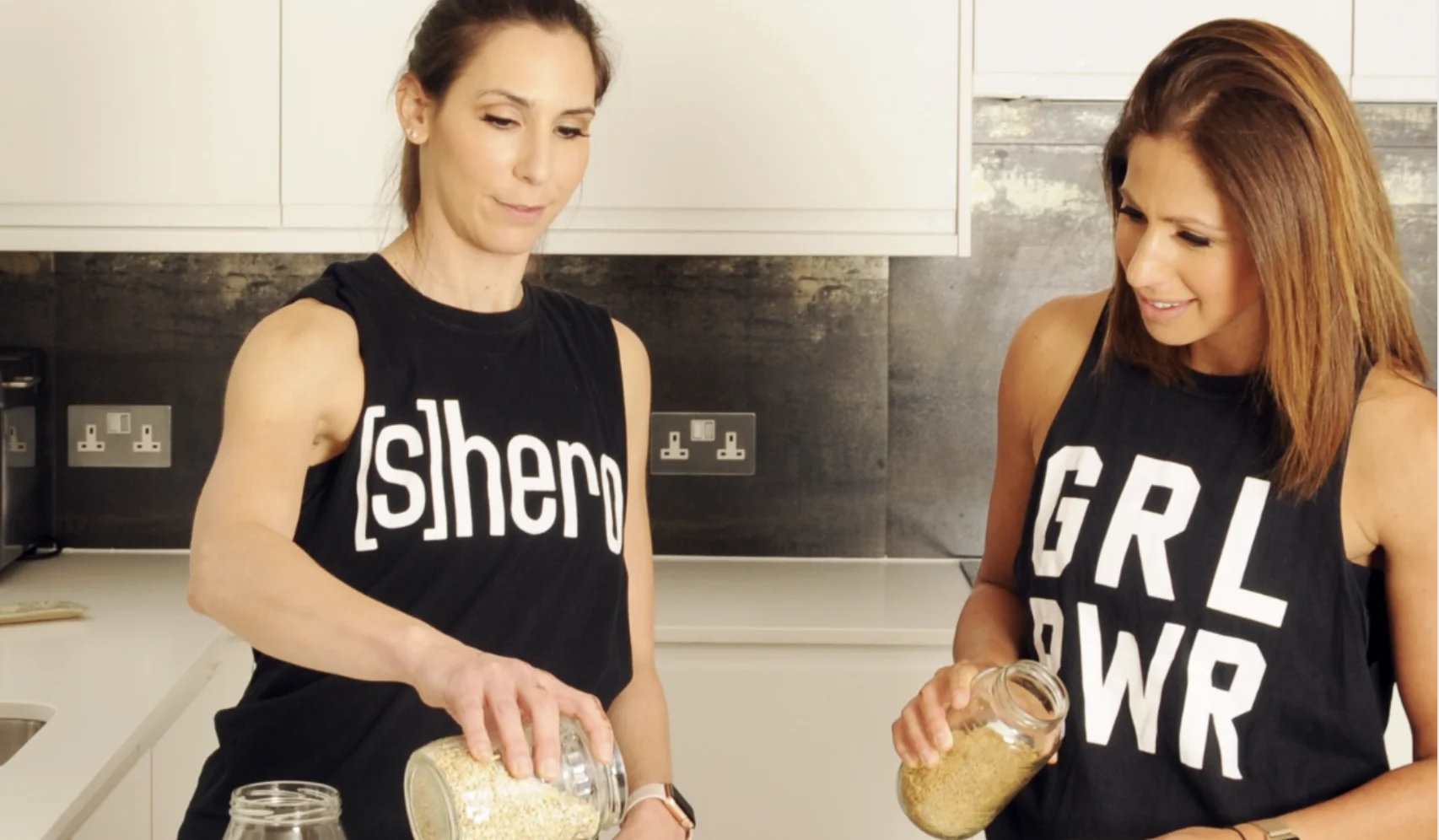
In this episode of acechats, Anna and Charlotte talk to Marlie Cohen, who creates content as Kale & Krunches. She's a trainer and a mum of two girls, based in Toronto, and she runs a fitness app for busy women and busy mums called Bounce Forward. Anna has four children and Charlotte has three, so they came to the chat with plenty of their own juggling stories.
Marlie's way back into fitness after her second baby started with a gap she couldn't fill.
I could not find a single trainer, creator, podcaster, person that I related to who was in the thick of postpartum, who was speaking to real moms.
So she shared what she was really doing. Her babies were not great nappers, so she'd get maybe 10 minutes with the baby down in the cot, close the nursery door and do a 10-minute workout on the hallway floor. Her motto for it is about moving on rather than going backwards.
Any big transition or phase of life, no one is going back in time. We're all moving forward.
What does a strength training week look like when life is full?
Marlie's own week is a useful example, because it's built around her real constraints.
She did try the gym. With young children, one of whom still sleeps in the family bed, sneaking out in the morning caused upheaval at home, and school finishes at three o'clock, so there's no time to drive and park. At-home training is what works for her.
The other thing she stresses is the difference between moving around and training.
There's exercising or working out, and then there's training. And then if you're training, you're following a plan.
Marlie says she stayed in a softer season of 10-minute workouts and random workouts for a while, and that there's a time and a place for that. When she felt ready for more, she moved to a structured strength programme. And she's clear with new mums who want to jump straight into her strength programme that you don't have to rush into it.
Honor the slower season. You have your whole life to get into it a little bit harder.
If you're wondering how many sessions is enough, NHS guidance for adults is strengthening activities that work all the major muscle groups on at least 2 days a week (NHS physical activity guidelines for adults aged 19 to 64). We go through what that means for women in their 40s in how often should a woman over 40 lift weights. And if a plan feels like one more thing to get wrong, stop overcomplicating fitness is a good place to start with the simple things first.
Why does rest matter as much as the lifting?
Because it's where a lot of busy women trip up, and it's the opposite of what you'd expect.
Anna and Charlotte told the story of a talk they went to on women and midlife, where the speaker said everyone should exercise every single day. They disagree. They work out four or five times a week themselves, and they see rest days as just as important as the sessions.
Marlie sees the same thing with her members.
I don't need to convince them to work out. I need to convince them to rest.
Her programme has one minute of rest between the compound lifts and heavier sets, and she gets questions about it all the time. Anna and Charlotte passed on a tip they picked up from other coaches: use the gaps. Pick up some steps, march on the spot, and put the phone down. Over a whole workout, those rests can add up to a couple of thousand steps.
Everything's negotiable when you have kids, especially young kids, and something will always come up and they'll always come first.
That's Marlie's answer when asked for her non-negotiable. It's a good reminder that a plan which bends is the one you can keep.
Will lifting weights make you bulky?
No, and the three of them are firm about it. Marlie, Anna and Charlotte all know how slow muscle is to build.
I wish it was that easy. Do you know how long I've been trying to put muscle on, girl?
Marlie's view is that the bulky feeling is usually muscle trying to poke through other layers of fat. If you want a toned, defined look, you gain muscle and lose fat, which is body recomposition. Anna and Charlotte add that it took real, sustained work to build the muscle they have. We cover the idea in body recomposition after 40.
On food, the hosts see tracking as a piece of data, nothing more. Their challenge to anyone who has never tracked it is to get 100 grams of protein into one day and see how different it feels. We explain Anna and Charlotte's own rule for spreading protein across the day in why 30g of protein with every meal, and if you're choosing weights, how heavy should your dumbbells be will help.
What about pregnancy, postnatal recovery and the pelvic floor?
This post is general education, not medical advice. Anna and Charlotte are qualified personal trainers and nutritionists, not clinicians, and Marlie is a trainer too.
What the NHS says is that its adult physical activity guidelines are also suitable for pregnant women and new mothers. When you start exercising after pregnancy, your activity choices should reflect your activity levels before pregnancy, and you should include strength training. After your 6 to 8 week postnatal check, you can start more intense activities if you feel you're able to, but vigorous activity isn't recommended if you were inactive before pregnancy, and the NHS says to speak to your GP first if you haven't exercised for a while or have any concerns (NHS). That's general NHS guidance for adults in England, not advice for your own case.
Your own situation is different. How your birth went, how you're healing and what's right for your pelvic floor are questions for your GP, your health visitor or a women's health physiotherapist. If something hurts, or you have any concern, speak to them first.
In the episode, Marlie says that when a member who has just had a baby wants to jump into her strength programme, she tells them no, and points them to the gentler workouts instead. That's her own approach to her own members, not advice for you.
Where does aceSTRONG fit?
If you want the plan without having to build it yourself, aceSTRONG is a 12-week strength programme designed for women in their 40s, 50s and beyond. It's 3 follow-along strength workouts a week that you can do at home or in the gym with minimal equipment, with guidance on how to progress your weights and the aceSTRONG community alongside you. It's a one-off payment of £99 for the 12 weeks. It's a programme you follow, not live coaching or classes, so you fit the workouts around your own week.
Anna and Charlotte's moderate approach holds for every stage of life: getting stronger, eating well and walking, without going crazy on supplements. If that sounds like the kind of plan you can keep, take a look at aceSTRONG.
Frequently asked
How do I fit strength training in when I have young children?
Marlie Cohen's answer on the podcast is a plan that fits the day you actually have: four 35 to 40 minute workouts a week at home, two upper body and two lower body, with walking on the other days. In the very early baby months she fitted in 10-minute workouts instead. NHS guidance for adults is strengthening activity on at least 2 days a week.
Do I need a gym to strength train as a mum?
No. Marlie tried the gym and it didn't suit her life with young children, so she trains at home with a set of weights, a mat and a resistance band. NHS guidance says you can strengthen your muscles at home or in a gym, with weights, resistance bands or your own body weight.
Will lifting weights make me bulky?
Marlie's reply is that she wishes it were that easy, because building muscle is slow and hard work. She says the bulky feeling is often muscle showing through a layer of fat, and that a toned look comes from gaining muscle and losing fat, which is body recomposition.
When can I start strength training after having a baby?
That depends on you, your birth and your recovery, so ask your GP, health visitor or a women's health physiotherapist. NHS guidance says to include strength training when you start exercising after pregnancy, and that you can do more intense activities after your 6 to 8 week postnatal check if you feel able to. Anna and Charlotte are trainers and nutritionists, not clinicians.