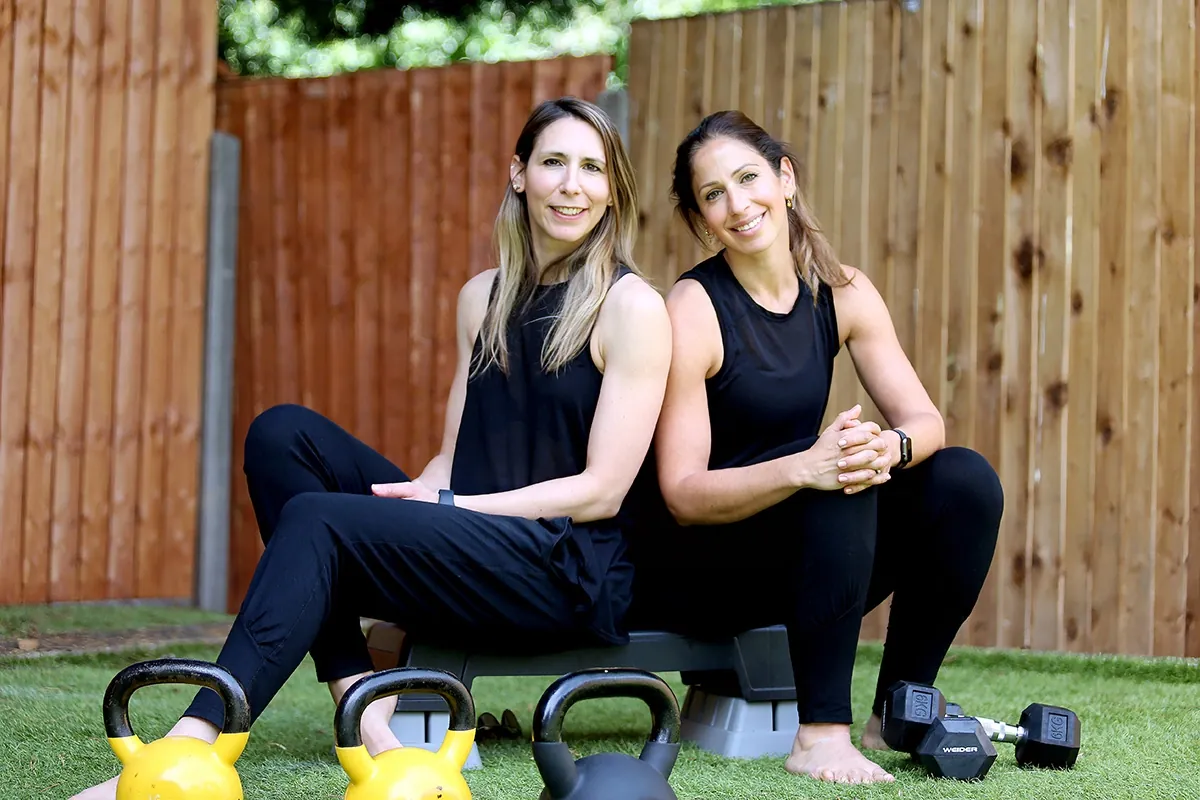
Is self-belief the thing holding back your weight loss?
The thing keeping many women stuck isn't their diet or their hormones. It's the story they've been telling themselves for years. Anna and Charlotte on where that story comes from, why every setback feels like proof, and how to write a different one.
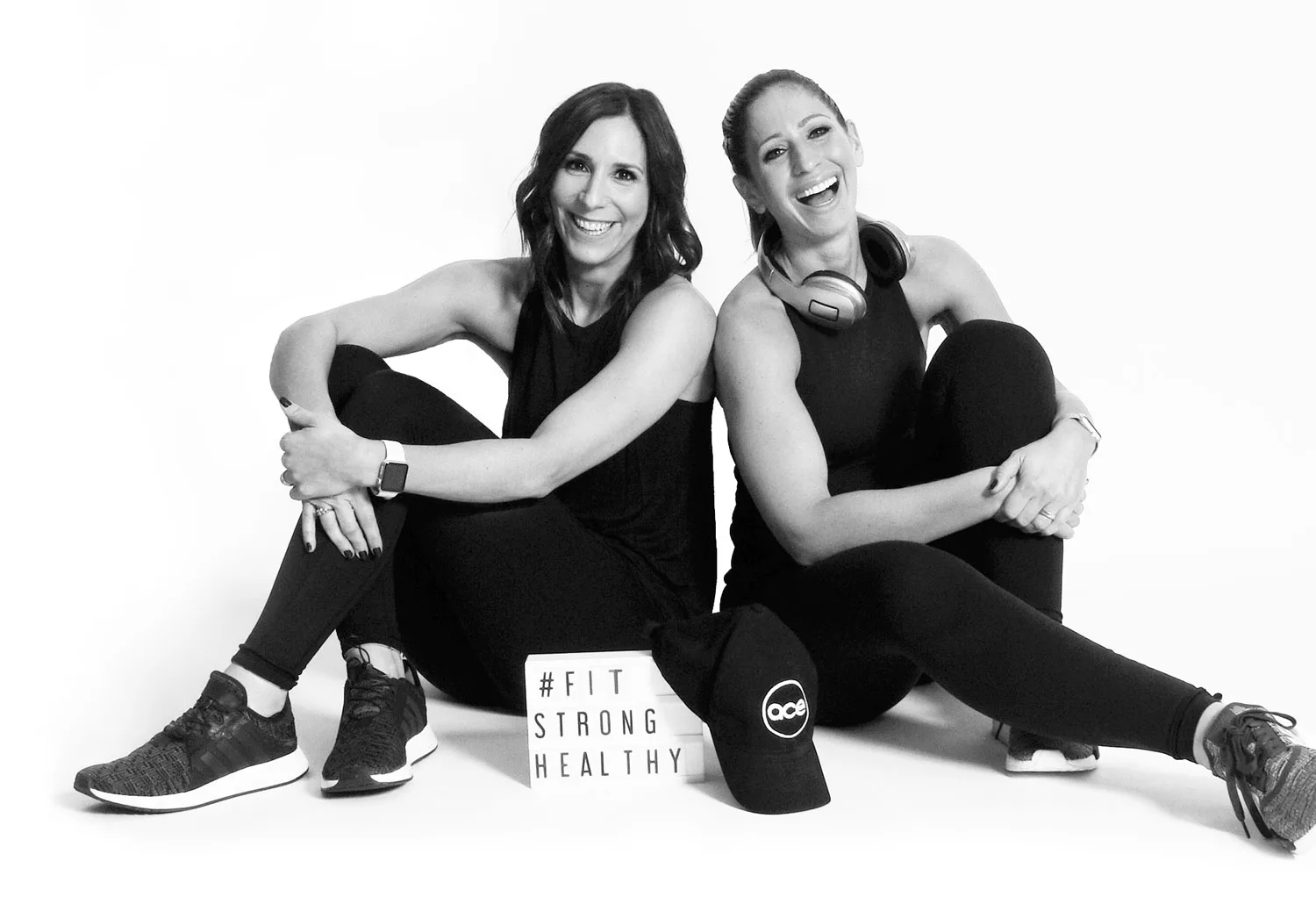
By Anna & Charlotte · MNU-Certified Nutritionists · Level 3 Personal Trainers
Published 10 June 2026 · Updated 6 July 2026
TL;DR
For a lot of women, the thing holding back weight loss in their 40s isn't the diet or the hormones. It's the story they've told themselves for years: 'I can't diet,' 'I'm not sporty,' 'I always put it back on.' Anna and Charlotte, MNU-certified coaches for women over 40, on how those stories harden into identity, why every missed workout starts to feel like proof you were right, and the good news: the story isn't fixed. You change it by spending time around people who've done it, opting in on purpose, scheduling the workout before life eats the day, and telling yourself a different story. I am someone who can.
Key takeaways
- The things you repeat about yourself become a self-fulfilling prophecy. 'I can't diet.' 'I'm not sporty.' 'I always gain it back.' What you tell yourself you are, you tend to become
- Most of these stories were handed to you, by a parent, a partner, a PE teacher. Often by someone who never changed their own behaviour and quietly believes change isn't possible
- Every setback becomes 'proof'. A missed workout becomes evidence you're not sporty. A bad weekend becomes proof you can't. The identity turns into a protective mechanism, an excuse that saves you from the blame
- The story is not fixed. One of the fastest ways to rewrite it is to spend time around people who believe change is possible. You borrow their belief until you build your own
- 'It's different for you' is a myth. Anna used to eat one meal a day, matzah and salt for lunch. The same high-protein lunch every day now is a choice she makes, not a superpower she was born with
- Nobody accidentally gets results. You have to opt in, decide it matters, and protect the workout like a client appointment, before the day fills up and swallows it
- 'I've got kids' is the handiest excuse of all. One of the coaches trained at 5.30am before the kids woke, and paid for creche just to fit a session in. Being a mum is a full-time job. You still have to carve out the time, or it never happens
You can have the best plan in the world and still not move.
Anna and Charlotte have coached enough women through their 40s to know that the thing quietly holding most of them back isn't the diet, and it isn't the hormones. It's a story. One they've been telling themselves for so long it stopped sounding like a story and started sounding like a fact.
This episode is about that story. Where it came from, why it feels so true, and the genuinely good news underneath it: it isn't fixed.
Is your mindset really holding back your weight loss?
More than you'd think. There's a reason the phrase self-fulfilling prophecy exists.
How much of what we tell ourselves that we are, do we end up being?
If you've decided you're "an all-or-nothing person" or someone who "always gains it back", you'll make decisions that quietly prove yourself right. You'll skip the recovery meal because what's the point. You'll write off the week because Friday went sideways. The belief comes first. The behaviour follows it. And then the behaviour becomes the evidence.
Where does the story even come from?
Usually, it was handed to you.
Often this is a story that has been told to you by other people. Whether it's partners, parents, teachers. Teachers are the ones. They do so much damage.
Here's the uncomfortable part. It's rarely because those people didn't love you. It's often because they were struggling themselves, and they'd never successfully changed their own behaviour, so somewhere along the line they decided it couldn't really be done. And they passed that on.
Why does every setback feel like proof?
Because once you hold a belief about yourself, your brain goes looking for evidence.
You miss one workout and it becomes proof you're not the kind of person who trains. You have one heavy weekend and it becomes proof the whole thing is pointless. Over time you stop trying to change the behaviour at all, because you've quietly decided the behaviour is who you are.
We're not trying to change our behaviour anymore. We're setting our identity. And it becomes a protective mechanism.
That's the sting in it. The story is doing a job. If "I can't lose weight, I always gain it back" is just true, then you don't have to sit in the discomfort of trying and it not going perfectly. The excuse gets you off the hook. It makes you feel a little better in the moment. It also keeps you exactly where you are.
Can you actually rewrite it?
Yes. And the fastest way in isn't a new diet. It's other people.
The story is not fixed. We can rewrite it. And one of the fastest ways to do that is to spend more time around people who believe that change is possible.
Surround yourself with women who take responsibility, who aren't blaming their age, their hormones, their genetics or their circumstances for everything, and something shifts. You start, almost without noticing, to borrow their belief.
When you're around positivity, you start almost borrowing people's belief that you can do something. And you start building your own.
This is the honest reason a group works better than an app. Not the workouts, the room. Being surrounded by women aiming at the same thing, some of whom arrived with exactly the same negative story you did, and watching them change it. That's what the free aceLIFESTYLE community is for. You don't have to commit to anything to sit in the room and see it happening.
"But it's different for you"
Anna and Charlotte hear this one constantly. You're fitness people. You've always eaten well. It's easy for you.
When I think back to how I used to eat, the way I used to eat was terrible. I used to have one meal a day, or eat matzah and salt for lunch, and then a proper dinner. That was my diet.
The lunch Anna eats now, the one the group asked her to photograph because she said she has the same thing every day, is five egg whites, a whole egg, 100g of cottage cheese and six rice cakes. Around 480 calories, 40g of protein. It isn't willpower she was born with. It's a decision she makes on repeat.
We could eat anything for lunch. We choose that lunch every day, because we want to feel fuelled and feel good for the rest of the day. I opt in to that. That is a choice.
That word, opt in, is the whole episode in two syllables.
What does "opting in" actually look like?
It looks like deciding, on purpose, that the thing matters, and then defending it.
We will not see a client, we will not see another friend, we will not make another appointment when we have those workouts. Because otherwise we will not get our workouts in.
Nobody accidentally gets results. You have to want them, decide they're important, and be willing to keep going when it isn't perfect. Anna and Charlotte aren't more disciplined than you. They've just decided, and then built a week that protects the decision.
"I don't have time, I've got kids"
The most understandable excuse, and the handiest one.
Being a mum is a full-time job. It genuinely eats your hours. It's also a very convenient reason not to carve out any time for yourself, and it's worth being honest about which one is happening.
I used to get up at 5.30 in the morning and train before they got up, because it was the only time. Later I paid to put my daughter in creche so I could exercise, and people thought that was mad. But to me it was a no-brainer. It made me happy. It made me feel good about myself.
That's the reframe most women need. Looking after yourself isn't the thing you get to after everyone else. It's the thing that lets you show up for everyone else without falling over.
If you're not prioritising yourself in some way, at one point it's all going to collapse, like a house of cards. And then everyone around you feels it.
If you want the training and eating side laid out properly for this stage of life, the body transformation guide for women 40+ and the nutrition guide for women over 40 go deeper than a podcast can.
How do you make it stick?
You schedule it in. That's it. That's the trick.
It's all very well starting your day with good intentions, I'll take that walk. But as the day goes on and your head fills up and your schedule fills up, it never happens.
They've seen women turn up to the school run in workout gear they put on that morning, hoping the time to actually train would somehow appear. It never did, because it was never booked. If you've got young kids, the truth is brutal and simple: get it done before three o'clock, because the three-to-seven window belongs to everyone but you.
The walk, especially, does more than burn calories.
I cannot tell you how much I appreciate my walks every day. Even if it's just 20 minutes, it resets you. It recharges you. It makes you feel better.
What about the days you just don't like your body?
They happen. To Anna and Charlotte too. Self-belief doesn't mean loving every inch of yourself. It means being honest and kind at the same time.
I've always been overweight, and I perceive myself, no matter what I weigh, as someone who's overweight. I can't unsee that. Sometimes I have to say to myself, that's ridiculous, Anna.
Part of making real changes is accepting the body you've actually got, not the one in the magazine. You can get slimmer and stronger. You can't swap yourself for someone else, and chasing that is how people end up miserable at a weight they once dreamed of. The goal isn't a different person. It's the best, strongest, most capable version of the one you are.
So where do you actually start?
Not with a diet. With the story.
As Anna put it, quoting the book Atomic Habits: be the person. Say the things you need to hear to become the person you're trying to be. The behaviour follows the belief, not the other way round.
Start telling yourself, you are someone who can lose weight if they want to. And changing your narrative is where it begins.
Want to change the story with people doing the same?
This is the conversational version. If you want the room:
Or just join the free Skool community. You don't need to commit to anything. Come and borrow some belief.
Frequently asked
Can you actually change your mindset about losing weight?
Yes, and Anna and Charlotte have watched it happen again and again. The story you tell yourself isn't fixed. The quickest way to start rewriting it is to spend time around people who take responsibility and believe change is possible, because you start borrowing their belief until you build your own. Then you practise telling it differently: not 'I always put it back on' but 'I am someone who can lose weight.' It sounds small. It's the thing most diets never touch.
Why do I keep failing even though I try really hard?
Usually because you keep trying new things, Slimfast, Weight Watchers, intermittent fasting, without changing the belief or the habits underneath. Some of those are decent tools. None of them get to your core belief system. Anna shared a line on the episode that stuck: you can't make the changes you want to make while dragging your old habits behind you. If you want to become a new person, you have to build new habits, and that means waking up and making different choices, most days, not perfectly.
Is it harder to look after yourself as a busy mum?
Honestly, yes. But 'I don't have time' is usually an excuse dressed up as a fact. Motherhood is a full-time job, and it's also the handiest reason in the world to skip your own workout. One of the coaches trained at 5.30am before the kids were up, and later paid for creche so she could exercise, and people thought she was mad. It made her happy and it made her a better version of herself for everyone else. You have to fill your own cup, or at some point the whole house of cards comes down.
How do I make exercise an actual habit?
Schedule it in, or it won't happen. Good intentions evaporate as the day fills up. Anna and Charlotte protect their workouts like a booked client, no friend, no appointment, nothing gets that slot. If you've got young kids, get it done before the three-to-seven window when you become a taxi driver and a snack dispenser. And walk every day, even 20 minutes. It resets your head as much as it moves the needle on your body.