Nutrition for Women Over 40: What Actually Works in Real Life
If you're a woman in your 40s or beyond, chances are you've tried more than one way of losing weight. In our experience, the framework usually matters more than discipline. Here's what tends to work.
If you're a woman in your 40s or beyond, chances are you've tried more than one way of losing weight.
Tracking calories. Cutting carbs. “Being good” Monday to Friday. Intermittent fasting. Clean eating. Skipping meals to make up for the weekend. Starting again every Monday.
And to be fair, many of those approaches probably did work.
For a while.
That's often what makes this so frustrating.
Because when something works short term but never lasts, it's easy to assume the problem is you.
That you lack discipline.
That you're inconsistent.
That you just need to try harder.
In our experience, that's rarely the issue.
The bigger problem is usually the framework.
Because nutrition for women over 40 often needs to look different to the approaches many of us relied on in our 20s and 30s.
Not because the fundamentals change completely.
But because your body, your hormones, your recovery, your schedule, and your priorities often do.[1][2]
At ace, we coach women in their 40s and beyond in NW London and online across the world, and the women who get the best long-term results rarely do it by becoming stricter.
They do it by becoming more consistent.
Here's what actually works.
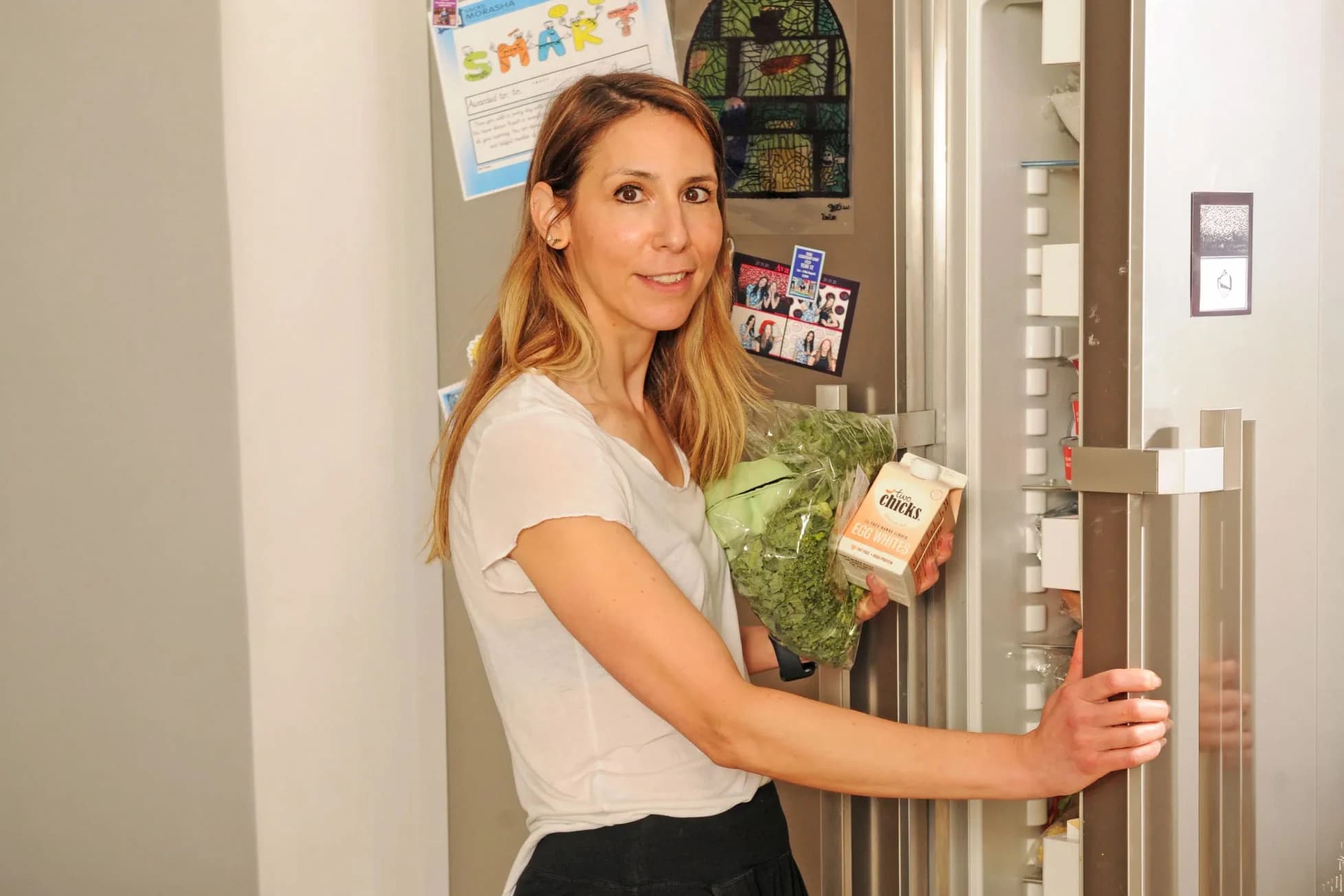
“There are no banned foods here. There are no cheat days, because there's nothing to cheat on. Holidays are for ice cream. Friday night is for the takeaway you actually wanted. The work isn't in cutting things out, it's in knowing what your body needs underneath the rest of it.”
Charlotte, ace founder
Why standard nutrition advice often falls short for women 40+
1. Your body may be responding differently than it used to
One of the most common things we hear is:
“I'm not eating badly... so why am I gaining weight?”
And sometimes:
“I'm doing exactly what I used to do.”
For many women, that experience is real.
As women move through their 40s and into the menopause transition, hormonal changes can influence body composition, appetite, sleep, insulin sensitivity, and energy levels.[1]
You may notice:
- fat distribution changing
- increased hunger at certain times
- poorer sleep
- slower recovery
- energy fluctuations
- more emotional eating when stressed or tired
That doesn't mean your body is working against you.
But it may mean the old “eat less and push harder” approach feels less sustainable than it once did.
The answer isn't panic.
It's building a more realistic structure.
2. Restriction works, until life happens
Short-term dieting can absolutely create results.
That's not the issue.
The issue is what happens when:
- work gets busy
- you go on holiday
- the kids are off school
- stress ramps up
- motivation dips
- dinner ends up being whatever's easiest
This is where highly restrictive plans tend to fall apart.
Not because women fail.
Because the plan depends on ideal circumstances.
Long-term weight management research consistently shows that maintaining weight loss is often far harder than losing it in the first place.[3]
Which is exactly why sustainability matters so much, and why a real body transformation for women over 40 looks nothing like a crash plan.
If your plan only works when life is calm,
it probably isn't the right plan.
3. Many women have been taught to overcomplicate food
Good foods.
Bad foods.
Cheat meals.
“Being on plan.”
“Falling off.”
Starting fresh.
Earning food.
Undoing weekends.
For a lot of women, food has become far more emotionally complicated than it needs to be.
That creates stress.
And stressed, overwhelmed people rarely make calm, consistent decisions around food.
The women we coach often arrive knowing a lot about nutrition.
What they're missing isn't information.
It's a framework they can actually stick to.
The aceRULES
In our coaching, we build nutrition around three simple habits.
Not because they're magical.
Because they're practical.
We call them the aceRULES.
Three habits. Same three, every day.
- 01
30g of protein with every meal
- 02
500ml of water with every meal
- 03
No food after dinner
That's the framework.
No banned foods.
No “cheat days”.
No perfect eating.
No guilt around holidays, birthdays, or takeaway nights.
Just habits that create consistency.
Let's break down why each one works.
(If you'd rather see the rules in action across an actual week of meals first, our free 7-day meal plan is structured around all three.)
Rule 1: 30g of protein with every meal
Why protein matters more than most women realise
Protein becomes increasingly important as we get older.
It supports:
- muscle maintenance
- recovery
- satiety
- body composition
- healthy ageing
And many women simply aren't eating enough of it, particularly earlier in the day.
This matters because maintaining muscle becomes more important in midlife, especially alongside strength training.[4]
Protein also tends to help women feel fuller for longer, making food choices easier rather than harder.
The recommendation to spread protein intake across the day is well supported, with evidence suggesting older adults may benefit from higher per-meal protein intakes to support muscle protein synthesis.[5]
That's where our 30g rule comes from.
It's a practical target.
Not perfection.
What 30g of protein actually looks like
Examples:
Breakfast
- Greek yoghurt + berries + protein powder
- Eggs + cottage cheese + toast
- Protein smoothie with milk, protein powder, fruit
Lunch
- Chicken salad wrap
- Tuna on seeded toast
- Egg and smoked salmon plate
Dinner
- Salmon + vegetables + potatoes
- Chicken stir-fry
- Turkey meatballs + rice
Snacks (if needed)
- protein yoghurt
- boiled eggs
- cottage cheese
- protein shake
The mistake we see most
Women “saving” protein for dinner.
A light breakfast.
A light lunch.
Then a decent protein-heavy evening meal.
Total protein might look okay by the end of the day.
But spreading protein intake across meals tends to work better than relying on one large serving at night.[5]
Breakfast matters.
Lunch matters.
Rule 2: 500ml of water with every meal
Hydration sounds basic.
Because it is.
But simple doesn't mean unimportant.
Many women underestimate how much low-level dehydration can affect:
- energy
- concentration
- appetite awareness
- digestion
- food choices
And “I drink loads of coffee” doesn't count as a hydration strategy.
The reason we anchor water to meals is simple:
It creates consistency.
Rather than vaguely aiming to drink more, you automatically build hydration into your day.
Three meals = 1.5 litres.
Done.
What this looks like
A pint glass of water with breakfast.
Another with lunch.
Another with dinner.
That's it.
Still water. Sparkling water. Lemon water.
Keep it simple.
The common mistake
“I drink water throughout the day so I don't need this.”
Maybe.
But habit stacking works.
Attaching hydration to something you already do (eating) makes consistency easier.
And that's the point.
Rule 3: No food after dinner
This is the rule women often resist most.
And then end up loving.
Not because eating in the evening is automatically “bad”.
But because this is where many women quietly lose consistency.
Not through a meal.
Through grazing.
A handful of crackers.
Chocolate while watching TV.
Leftovers while clearing up.
Cheese with wine.
Random bites that don't feel like eating.
The issue isn't morality.
It's awareness.
For many women, evening eating has less to do with hunger and more to do with habit, tiredness, stress, or simply being the first moment all day they've stopped.
Creating a clear boundary removes decision fatigue.
Dinner ends.
The food day ends.
Simple.
What this actually means
Not:
“No eating after 7pm.”
Not:
“Intermittent fasting.”
Not:
“Punishment.”
Just:
Once dinner is done, the kitchen is closed.
Herbal tea? Fine.
Water? Fine.
Food? No.
The common mistake
“I don't snack that much in the evening.”
Then women start paying attention.
And realise:
- finishing the kids' leftovers counts
- biscuits with tea count
- chocolate while tidying counts
- grazing while cooking counts
This rule isn't about restriction.
It's about creating awareness.
What about treats, weekends and holidays?
This matters.
Because many women hear “structure” and immediately assume rigidity.
That's not what we mean.
At ace:
- holidays include ice cream
- birthdays include cake
- Friday night takeaway is allowed
- meals out are part of life
One meal doesn't ruin progress.
One weekend doesn't ruin progress.
One holiday definitely doesn't ruin progress.
Consistency matters far more than isolated choices.
That's why we don't use the language of “cheating.”
There's nothing to cheat on.
What if calorie tracking works for me?
Great.
Some women find tracking incredibly useful.
It can help with:
- awareness
- structure
- portion understanding
- creating a calorie deficit where fat loss is the goal
Tracking is a tool.
Not a requirement.
Not a personality trait.
Not a forever rule.
For some women it helps.
For others it becomes stressful or unsustainable.
Good coaching helps you use the right tools for you.
The bottom line
Nutrition for women over 40 doesn't need to be extreme.
It doesn't need to be complicated.
And it definitely doesn't need to revolve around guilt.
What tends to work is surprisingly simple:
- enough protein
- enough hydration
- clear eating boundaries
- flexibility around real life
- consistency over perfection
Not glamorous.
Just effective.
And for most women, that's exactly what's been missing.
Frequently asked
How is this different from intermittent fasting?
Intermittent fasting is structured around a specific eating window (commonly 16:8, sixteen hours fasting, eight hours eating). You're watching the clock. The aceRULES don't watch the clock; they watch the meal. As long as 30g of protein lands at each one, hydration sits with each one, and food stops when dinner stops, your body gets the metabolic benefits without the discipline of timed fasting. The aceRULES take the second route because it survives real life.
What about during perimenopause specifically?
This is exactly the audience the aceRULES were built for. Perimenopause is when the things that "used to work" stop working, and almost every woman who lands here has spent two or three years feeling like her body changed the rules without telling her. The rules in this guide are designed around that biology: protein protects lean mass that's now harder to build, hydration supports the appetite signalling that's become noisier, and ending the food day at dinner protects sleep that's now more fragile.
Can I drink alcohol on this?
Yes. Honestly. We're not interested in lecturing women in their 40s about a glass of wine on a Friday. What's worth knowing: alcohol is calorically dense (around 7 kcal per gram), it sits in your liver as a metabolic priority that pauses fat oxidation while it's processed, and in some women perimenopausal hormonal shifts make hangovers and sleep disruption noticeably worse than they used to be. The honest framing: a glass with dinner is fine. Two bottles between Friday and Sunday is your call, but expect it to interfere with the work the rest of the week is doing. You haven't broken a rule; you've spent some currency. Spend it where it's worth spending.
What about cheat days, holidays, and birthdays?
There are no cheat days, because there's nothing to cheat on. There's no banned food. Holidays are for ice cream. Charlotte literally writes that to women in our community most weeks. The point of the rules is they're defaults, not a contract. On holiday, the default loosens. A birthday is a birthday. The work is in what you come back to on the Monday: does the 30g land at breakfast, did you sit down with the pint of water, was the food day done at dinner? That's where the rules earn their keep. Restrict yourself harder on a Tuesday because of what you ate on a Sunday and you're back inside the cycle this guide is designed to break.
Do I need to count calories?
No. None of the women we coach count calories. That's deliberate. Calorie counting works in young men in clinical trials and almost nobody else, and even when it works in trial settings, it's the single highest-friction nutrition habit in real-world adherence. The aceRULES replace calorie counting with three pieces of structure (protein per meal, water per meal, food window per day) that produce the same outcome (sustainable change in body composition) without the daily admin. If you've spent years telling yourself you "should be tracking", you're allowed to stop. The rules do the work.
A room full of women who've stopped fighting their food.
If anything in this guide felt true, the next step isn't a sales call. It's the ace community on Skool. A free room where over a thousand women like you are working through this kind of change together. You'll find recipes, the protein cheat-sheet for breakfast, lunch and dinner, and a thread you can ask questions in. Anna or Charlotte will see them. No card, no pressure, no commitment.
When you're ready for a structured 12-week programme (follow-along strength workouts plus the nutrition guide), that's aceSTRONG (£99 one-off).
Lots of love,
Anna & Char x
References
Five peer-reviewed citations directly back the substantive claims in this guide.
- [1]Davis SR et al. (2015). Menopause. The Lancet
- [2]El Khoudary SR et al. (2020). Menopause Transition and Cardiovascular Disease Risk. Circulation
- [3]Teixeira PJ et al. (2015). Successful Behaviour Change in Obesity Interventions in Adults. BMC Medicine
- [4]UK Chief Medical Officers (2019). UK Chief Medical Officers' Physical Activity Guidelines (Department of Health and Social Care). Recommends adults undertake muscle-strengthening activities on at least 2 days per week · gov.uk · Physical Activity Guidelines
- [5]Jäger R et al. (2017). International Society of Sports Nutrition Position Stand: Protein and Exercise. Journal of the International Society of Sports Nutrition (JISSN)
References curated by Anna & Charlotte. Updated 13 May 2026.