Pilates for menopause: where it fits
Pilates instructor Rebecca tells Anna and Charlotte what Pilates does for women over 40, and why lifting weights still comes first in menopause.
By Anna & Charlotte · MNU-Certified Nutritionists · Level 3 Personal Trainers
Published 18 November 2026
TL;DR
Pilates is a good addition in your 40s, and a poor replacement for lifting weights. It teaches you to move with control, builds body awareness and is calming. The NHS counts Pilates as strengthening activity, but Pilates instructor Rebecca told Anna and Charlotte it won't give you progressive overload on its own. Do both, and keep sessions short enough that you actually do them.
Key takeaways
- Pilates is movement with control. Rebecca, a Pilates instructor, says it starts with spine and joint health, and uses your breath
- The NHS lists Pilates among muscle-strengthening activities, and says adults should do strengthening work on at least 2 days a week
- Rebecca's own view is that Pilates doesn't give you progressive overload, so women over 35 should strength train alongside it
- For menopause, the NHS advice on bones is to focus on weight-bearing and resistance exercise, and it names yoga and tai chi as relaxing extras
- Short sessions count. Rebecca's idea is a five or seven minute routine, and short sessions stacked across a day add up
- Pilates doesn't give you a particular body. Genetics, stress, nutrition and sleep all play a part
Is Pilates good for menopause?
It can be a good part of your week. It just isn't the whole plan.
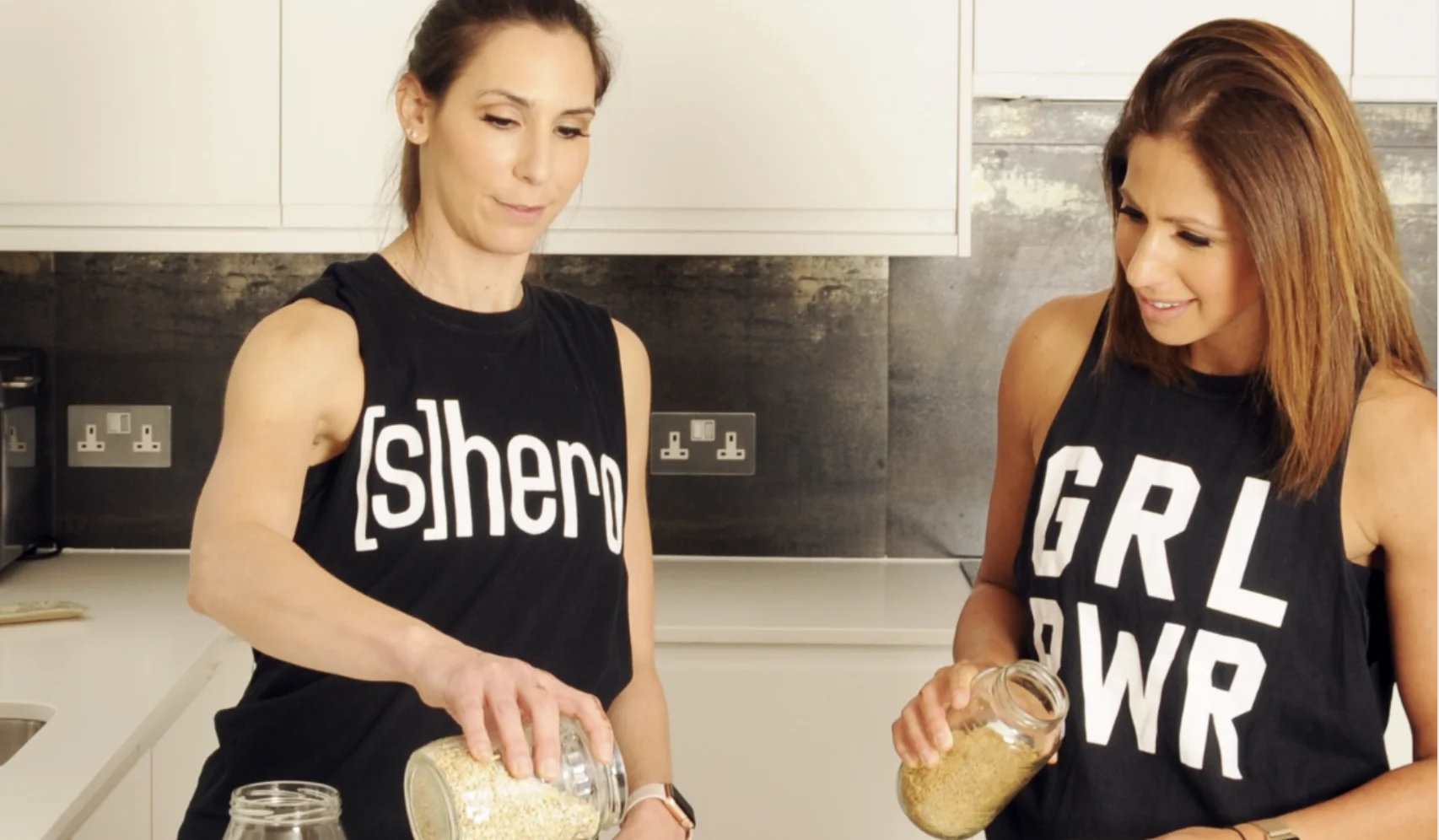
In this episode, Anna and Charlotte sit down with Rebecca, who teaches Pilates in person in a home studio and runs an app called The Pilates Prescription. Her focus is getting women over 35 into Pilates, in small doses. Anna and Charlotte are strength people through and through, so this is a friendly cross-examination: what does Pilates actually do, and where does it sit next to lifting?
A quick note before we start. Anna and Charlotte are personal trainers and nutritionists, and Rebecca is a Pilates instructor. None of them is a doctor. This is general education, not advice about your symptoms or your health. If you're struggling with menopause symptoms, your GP is the place to start.
What the NHS says is worth having beside you. Its menopause advice on things you can do (reviewed 19 May 2026) suggests exercising regularly, with a focus on weight-bearing exercises to build strength, as this can help protect against weakening bones. It names yoga, tai chi and meditation as relaxing things to try. Pilates isn't named on that page. Its physical activity guidelines for adults aged 19 to 64 do list pilates as a muscle-strengthening activity, alongside lifting weights and working with resistance bands.
That's the shape of the answer, and the rest of this post fills it in.
What is Pilates, actually?
Movement with control. Rebecca goes back to the name Joseph Pilates first gave it.
He called it Contrology, and so I love to just take it back to that, because it's just moving with control.
It isn't only a core workout. Rebecca says it's full body, with the breath built in, which is why she calls it a mindful form of exercise. Her own classes put spine health first and everything else branches off that. She also draws a line with yoga: from her limited experience, yoga holds poses, while Pilates is dynamic and keeps asking what is stabilising and what is moving.
You'll hear about mat, reformer, tower, Cadillac and chair in the episode. Rebecca's short version is that Pilates is one method, done on different pieces of equipment. The mat is where teachers learn it first, and every other piece adds something different rather than being harder or easier.
Pilates vs strength training: do you need both?
Rebecca says yes, and she's a self-confessed Pilates fan, so she's not saying it to be polite. She lifts weights too.
Pilates doesn't give you the progressive overload. It's not to say it isn't strength training. It is when you add in the resistance, you are strength training. But to what degree?
Her picture is simple. Start Pilates as a complete beginner and you will build muscle. Then comes a plateau.
If you start as a complete beginner then you know you're going to build muscle, but then you're going to hit a plateau where weight training will take over and give you those extra gains.
If you're newer to this, our post on how often a woman over 40 should lift weights covers the weekly rhythm, and menopause exercise: what actually helps explains why strength training comes first and where Pilates sits as an extra.
Is Pilates harder than lifting? Rebecca says neither is harder: they train different things. Anna and Charlotte love the burn of getting stronger, and they think Pilates would be harder for them than a barbell on their backs. Eight kilos in a deadlift and a mat class with a booty band can leave her glutes equally sore. They've promised to try a class, and they expect to be rubbish at it.
Rebecca also says the two help each other.
I weight train and I do Pilates, but I don't think I could do weight training as well if I didn't do Pilates. I think I'd be injured more. I think I wouldn't have as much body awareness.
Anna and Charlotte can tell which of their clients do Pilates when they train, from their breath and core control. That's their coaching observation, not a study.
What can Pilates do for you in your 40s?
Rebecca's list is about control, calm and joints, rather than building big muscle. This is her view as an instructor, and the research on any of it is a separate question.
On stress, she puts it like this:
It's just very calming for the body.
On bones, she doesn't claim Pilates does the job alone. Her view is that women need to lift heavier weights to build bone. The Royal Osteoporosis Society says the best way to help your bone strength is to do both impact and strength exercises, and that balance exercises help keep you steady. It also says exercise isn't a replacement for an osteoporosis medicine. If you have a bone health diagnosis, or a worry about one, ask your GP what's safe for you.
One more thing from the episode: Rebecca built a section of her app for lower back pain, which she calls the back lab. Her reasoning is that people do best when they do short snippets at home between sessions with a physio or instructor. If you have back pain, see your GP or physio first, and use any app as a supplement.
Can short Pilates sessions work if you're busy?
Yes, and that's the whole idea behind The Pilates Prescription. Rebecca calls it micro dosing your workouts. A full class doesn't have to be an hour, and a short one still counts. As they put it in the episode:
Even if you've got five minutes you could do five minutes and stack it over your day.
Her examples are the ones most of us know: waiting for the pasta to boil, or the bath to run. She also points to the gender exercise gap, the finding that women exercise less than men, and says it was part of why she built the app. In her words, time and domestic duties still fall on women's shoulders.
Anna and Charlotte's coaching rule is similar: if you've only got 30 minutes, it's always worth your while.
Does Pilates give you a "Pilates body"?
No, and Rebecca is blunt about it. Social media sells a long, lean Pilates body against a bulky strength body, and she thinks that's mis-sold.
Pilates doesn't give you a particular body.
Genetics, stress, nutrition and sleep all shape how you look, and all three of them agree on that. Weight loss isn't only exercise either, whatever kind you pick. Anna and Charlotte found out how much people want Pilates to be everything when they posted a reel saying Pilates isn't strength training and upset a Pilates teacher. Rebecca's take is that people want one thing to do it all, and no one thing does.
How would I fit Pilates around strength training?
Keep strength training as the foundation and use Pilates as the extra you enjoy. A simple way to place it:
The two-day minimum is the NHS adult guideline. Whether your Pilates sessions count toward it depends on how much load they carry, so if you want to build muscle, keep lifting. If you're perimenopausal and wondering what's going on with your weight, perimenopause and weight gain: what you can control is a good next read, and muscle loss after 40 explains why keeping muscle matters.
If you'd like a programme that does the strength part for you, aceSTRONG is a 12 week follow-along strength programme designed for women in their 40s, 50s and beyond: three strength workouts a week, at home or in the gym with minimal equipment, with guidance on how to progress your weights. It's a £99 one-off payment.
If you'd like the full conversation, press play at the top of this page. Rebecca also talks about teaching online versus in person, falls and balance, and how she cooks for a family of five.
Frequently asked
Is Pilates good for menopause?
It can be a useful part of your week. Rebecca, a Pilates instructor, describes it as mindful, calming and good for mobility and body awareness. The NHS advice for menopause is to exercise regularly with a focus on weight-bearing exercises, and it names yoga and tai chi as relaxing extras. So treat Pilates as an addition to strength training, and speak to your GP about any symptoms.
Is Pilates enough exercise for women over 40?
Not on its own, according to Rebecca. She says Pilates doesn't give you progressive overload, so once you've built some muscle you'll plateau and weight training takes over. The NHS says adults should do strengthening activities on at least 2 days a week and counts Pilates as one of them, alongside lifting weights and working with resistance bands.
What is the difference between Pilates and strength training?
Strength training asks you to lift something heavy and a little more each month. Pilates is movement with control, focused on spine and joint health, alignment and breath. Anna and Charlotte, who love weight training, think Pilates would be harder for them than a barbell squat, because it's a different skill. Rebecca does both and says each helps the other.
Can you do Pilates in short bursts?
Yes. Rebecca's idea is to micro dose Pilates, so a five or seven minute routine counts, and short sessions stacked across a day add up. If you've only got a few minutes, a short session beats skipping it.