Muscle loss after 40: what's happening, and how to build it back
Muscle declines gradually from around 30, and it can be rebuilt. Anna and Charlotte on muscle loss after 40, why it matters, and how to rebuild it.
By Anna & Charlotte · MNU-Certified Nutritionists · Level 3 Personal Trainers
Published 21 October 2026

TL;DR
Muscle declines gradually from around 30, at roughly 3 to 5% a decade according to the US Office on Women's Health, so by your 40s you may notice you feel weaker. It can be rebuilt. Progressive resistance training builds muscle, and UK guidelines ask adults to strengthen their major muscle groups on at least two days a week. Lift something hard enough to challenge you, do it regularly, and slowly ask for a little more.
Key takeaways
- Muscle loss with age is a slope, not a cliff. US and academic sources put it at roughly 3 to 8% a decade from around 30
- The menopause link is less settled than it sounds. One major review found muscle mass appears not to be affected by the drop in oestrogen
- Progressive resistance training has been shown to grow muscle, mostly in studies of older adults
- UK Chief Medical Officers advise muscle strengthening on at least 2 days a week, and say any is better than none
- The reason to lift is what your body can do at 60, 70 and 80, not a smaller number on the scales
You may not have a number for it, but you probably have a moment. The shopping bag that felt heavier. The stairs that took a bit more. The jar you used to open without thinking about it.
That can be muscle, and it has been quietly changing for longer than you think. The useful bit is that it isn't one-way. Here's what's going on, why it's worth caring about, and how you build it back.
How much muscle do you lose after 40?
A little at a time, starting earlier than most people expect.
The medical name for age-related muscle loss is sarcopenia. The US Office on Women's Health says it typically begins around age 30, when the body naturally loses about 3 to 5% of its muscle mass per decade. A review of the research puts the range wider, at approximately 3 to 8% per decade after the age of 30 (Volpi, Nazemi and Fujita, 2004). Both are US and academic sources, and neither gives a figure specific to UK women.
Then there's menopause, which is where most of the searching happens. Here the honest answer is that it's less settled than the internet makes out. The same review says very little information is available on the role of menopause in sarcopenia, and that muscle mass appears not to be affected by the drop in oestrogen. What the NHS does say is that menopause usually affects women between 45 and 55. So your 40s and 50s are when a decline that began years earlier, and a lot of life change, tend to arrive together.
Notice what's missing from the numbers: a cliff. It's a slope, and a slope is something you can do something about.
Why does losing muscle matter?
Because strength is what lets you do things.
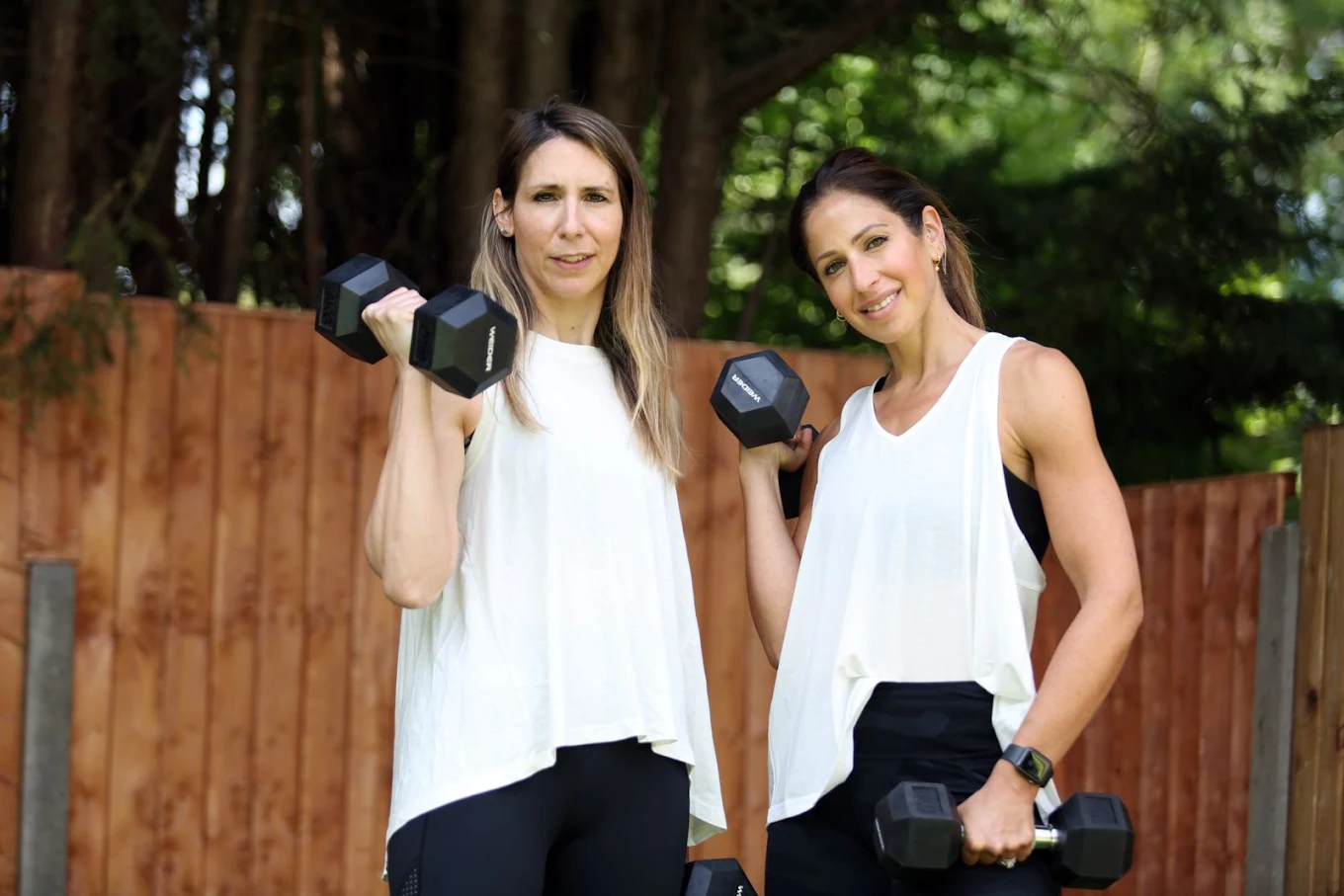
Anna and Charlotte put it plainly on Instagram on 24 September: "We're training for muscle, strong bones and bodies that can DO things now and for decades to come. Because getting older is inevitable. Getting weaker doesn't have to be."
Muscle also works alongside your bones. The Royal Osteoporosis Society says that staying active can help reduce the loss of bone and muscle strength, and that strength training can help your bone strength too. We cover the bone side in why strength training matters more after 40.
Getting older is inevitable. Getting weaker doesn't have to be.
None of this is about shrinking. Weight loss can be a by-product of lifting, but it isn't the reason to do it. The reason is the woman you want to be at 60, 70 and 80, still carrying her own bags and getting up off the floor.
Can you build muscle back in your 40s?
Yes, and you do it the way you always would.
The same research review says progressive resistance exercise training has been shown to induce muscle hypertrophy, which is the technical word for muscle growing. The studies it cites were in older and physically frail adults, so treat it as supporting evidence, not a guarantee.
"Progressive" is the word doing the work. It means asking your muscles for slightly more than last time: a heavier dumbbell, an extra rep, the same lift with better control. The body responds to being asked. If you want the practical version, how often should women over 40 lift weights goes through the week.
Anna and Charlotte said it on 20 October: "You don't need to be strong to start strength training. You strength train to GET strong!"
How much strength training do you need?
Less than you'd think to start, and more than nothing.
The UK Chief Medical Officers say adults aged 19 to 64 should do muscle strengthening activities at least 2 days a week, but any strengthening activity is better than none. The NHS agrees, asking for strengthening activities that work all the major muscle groups (legs, hips, back, abdomen, chest, shoulders and arms) on a minimum of two days each week. These are UK guidelines for the general adult population, not a plan for your body in particular.
If you're also wondering what this does to the scales, body recomposition after 40 explains why the number often hides the change. And if menopause is the bigger question, what actually helps with exercise in menopause is the companion to this one.
Where aceSTRONG fits
aceSTRONG is Anna and Charlotte's 12-week strength programme for women in their 40s, 50s and beyond. It's three follow-along strength workouts a week, at home or in the gym, with guidance on how to progress your weights and a community of women doing it alongside you. It's £99 as a one-off payment.
It's a follow-along programme, so there's no live coaching or classes. Anna and Charlotte have 25 years of experience between them, and they're in their 40s themselves. As they said when they launched it on 12 October: "We want women to build muscle, protect their bones, feel confident in their bodies and stay strong and independent as they age."
If you have a health condition, an injury, or you're not sure where to start, talk to your GP first. Then pick two days this week and put them in the diary.
Frequently asked
Can you build muscle in your 40s as a woman?
Yes. A review of research on ageing muscle reports that progressive resistance training induces muscle growth (the studies it cites were in older and physically frail adults, so this is supporting evidence rather than a promise for you). Anna and Charlotte are in their 40s themselves and train for muscle. Progress tends to be gradual, so the aim is to keep asking for a little more over months, not weeks.
What are the first signs of muscle atrophy?
The US Office on Women's Health says that when muscle and strength loss start to interfere with daily activities, such as walking, standing up or carrying groceries, it may be a sign of sarcopenia, the gradual loss of muscle with age. That is US information, not UK guidance. If you are worried about weakness, talk to your GP.
Does lifting weights help with menopause?
The NHS recommends regular exercise with a focus on weight-bearing exercise to help protect your bones, and says exercise can help with symptoms such as mood changes and hot flushes. Resistance exercise, such as using weights, is on its list. That's UK guidance. For anything specific to your own symptoms, talk to your GP.