Female Personal Training in NW London for Women 40+: What to Look For
If you're a woman in your 40s or beyond looking for a personal trainer, there's a fair chance you've tried this before. Often the issue isn't personal training itself. It's that the coaching wasn't designed for the stage of life you're actually in.
If you're a woman in your 40s or beyond looking for a personal trainer, there's a fair chance you've tried this before.
A gym induction that turned into a generic programme.
A trainer who seemed great initially, but whose approach never quite felt built around you.
An online coach who sent a PDF and disappeared.
A recommendation from a friend that started well but quietly fizzled when life got busy.
And after a few disappointing experiences, many women land in the same place:
“Maybe personal training just isn't for me.”
We'd challenge that.
Because often, the issue isn't personal training itself.
It's that the coaching wasn't designed for the stage of life you're actually in.
For women in their 40s and beyond, the conversation around fitness often changes. Hormones may be shifting, recovery can feel different, sleep becomes more important, and life is usually a lot fuller than it was a decade ago.[1][2]
That doesn't mean you need a gentler approach.
It means you need a smarter one.
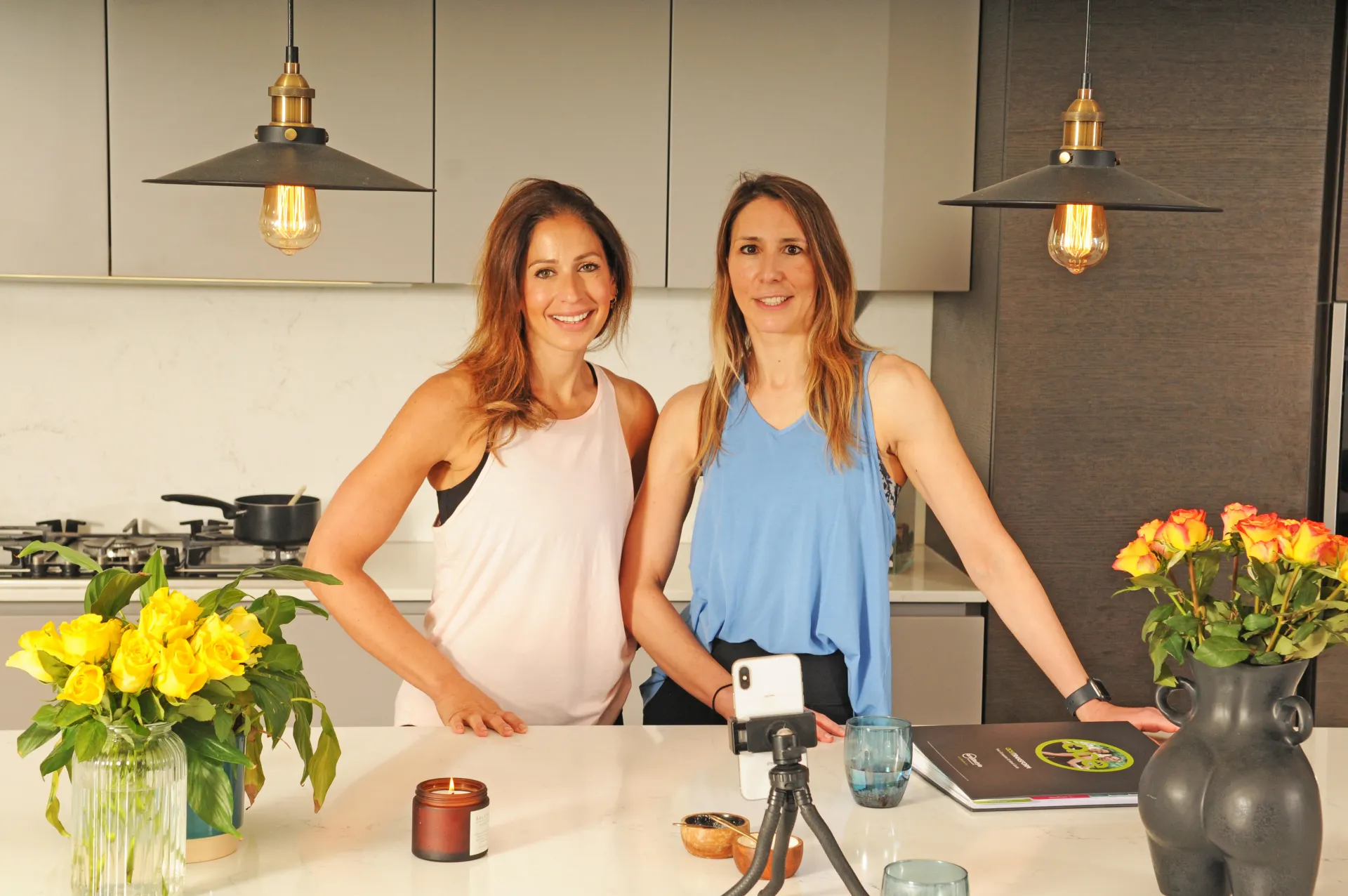
“We're coaching the women we used to be. Mid-30s, mid-40s, kids running around, a body that's changed, and absolutely no patience left for being shouted at by a 25-year-old in a singlet.”
Anna & Charlotte, ace founders
Why women 40+ often need a different approach to personal training
1. Your body may be responding differently than it used to
One of the most common things we hear is:
“I'm doing what I used to do, but it's not working anymore.”
And for many women, that feeling makes sense.
As women move through their 40s and into the menopause transition, hormonal changes can influence body composition, sleep, recovery, appetite, and energy levels.[1]
That doesn't mean your body is working against you.
But it may mean the strategies that once felt effective, more cardio, less food, pushing harder, don't feel as sustainable or productive as they once did.
Good coaching recognises that.
The answer usually isn't less challenge.
It's better programming.
Strength training, appropriate recovery, realistic progression, and nutrition that supports your goals all become increasingly important.
2. Your life is probably fuller than it used to be
The “ideal” fitness plan often assumes unlimited time and mental bandwidth.
Train five times a week.
Prep every meal.
Never miss a session.
Prioritise yourself perfectly.
For most women in midlife, that simply isn't real life.
You may be juggling:
- work
- children
- ageing parents
- relationships
- household responsibilities
- interrupted sleep
- social commitments
- the general mental load of keeping life moving
That matters.
Because even a technically excellent programme won't work if it doesn't fit your actual life.
One of the most overlooked parts of good personal training is adaptability.
A coach should be able to adjust the plan around a difficult week , not make you feel like you've failed because life happened.
3. The coaching relationship matters more than people realise
Technical knowledge matters.
Qualifications matter.
Programming matters.
But so does trust.
Many women don't need someone to scream motivation at them.
They need a coach who listens, understands where they're starting from, and can coach appropriately.
That might mean:
- returning to exercise after years away
- rebuilding confidence in the gym
- training after children
- navigating perimenopause
- managing previous injuries
- wanting to feel stronger without obsessing over weight
A good PT should understand both the physical and behavioural side of change.
Because consistency rarely comes from intensity.
It comes from feeling capable, supported, and clear on what you're doing.
What good looks like in a female PT for women 40+
Three things to look for in any PT before you commit. If a PT can't answer all three clearly, keep looking.
How to choose a female personal trainer in NW London
If you're looking for a female personal trainer in NW London, here's what we'd suggest checking before committing.
Three questions worth asking any coach, not just us.
- 01
Experience with women in this stage of life
- 02
Qualifications that actually mean something
- 03
Approach that survives your real life
1. Do they have experience working with women in this stage of life?
Not just “women”.
Not just “weight loss”.
Specifically women in their 40s and beyond.
That doesn't mean a younger trainer can't be excellent.
But experience matters.
The conversations are different.
The barriers are different.
The programming considerations are often different.
A coach who regularly works with women navigating hormonal changes, busy family lives, and midlife fitness goals will usually be better placed to support you.
2. Do their qualifications actually mean something?
Qualifications aren't everything.
But they do matter.
Look for:
- Level 3 Personal Training qualification (minimum)
- evidence-based nutrition education
- pre/postnatal qualifications (where relevant)
- demonstrated experience coaching real clients
At ace, both of us are MNU-certified nutritionists alongside our PT qualifications, which means our coaching looks beyond just exercise.
Because body transformation for women over 40 rarely comes down to training alone.
3. Can their approach survive your real life?
This is often the most important question.
Ask yourself:
Would this plan still work if:
- work gets busy?
- my child is off school?
- I sleep badly for a week?
- I go away?
- motivation dips?
If the answer is no, the plan probably needs rethinking.
Good coaching should flex around life, not require life to become perfect.
What working with us actually looks like
If you choose to work with ace, the process is straightforward.
No punish-you-to-prove-yourself sessions.
No generic templates.
No “all or nothing” coaching.
Just a clear, personalised approach.
Session 1
Assessment
This is where we get to know you. We'll look at your training history, previous injuries, movement patterns, confidence levels, goals, lifestyle, schedule, and nutrition (if relevant). This isn't about proving fitness. It's about understanding your starting point. By the end of the session, you'll have clarity on what we'd recommend and why.
Weeks 1-4
Building confidence and consistency
The early focus is usually: learning movement patterns, establishing consistency, finding appropriate training loads, building confidence, and making sessions feel achievable. Many women expect to be pushed to exhaustion immediately. That's rarely the goal. Better sessions aren't always harder sessions. The right amount of challenge creates progress. Too much too soon creates inconsistency.
Weeks 5-10+
Progress starts to build
This is where things often start to shift. You feel stronger. Exercises feel more familiar. Weights that felt intimidating become normal. Energy improves. Confidence grows. Research consistently supports resistance training for improving strength, lean mass, function, and metabolic health in midlife and older women.[3][4] The scales may move. Body composition may change. But often the first noticeable difference is how capable women start to feel.
Where we coach
We offer personal training in the format that fits your life best.
Train directly with Anna or Charlotte in our private Hendon studio.
Prefer the convenience of staying home? Our experienced aceTEAM mobile trainers can come to you across NW London.
Not local? Prefer flexibility? We also coach women online, wherever you are.
Who this is for
Our coaching tends to work particularly well for women who:
- want to get stronger
- want body composition change without extreme approaches
- are returning to exercise after time away
- feel less confident in commercial gym spaces
- are navigating perimenopause or menopause
- want accountability
- need a realistic approach that fits a busy life
The bottom line
The right personal trainer won't just give you a programme.
They'll give you a plan that makes sense for your body, your life, and your goals.
For women 40+, that often means less gimmick, more strategy.
Less punishment.
More consistency.
Because transformation rarely comes from doing everything perfectly.
It comes from doing the right things, consistently enough for them to work.
Frequently asked
What's the difference between hiring you for 1:1 PT vs doing aceSTRONG?
1:1 personal training is one-to-one coaching, in person or online, focused on your specific body and your specific goals. Sessions are typically 45-60 minutes, usually one to three times a week. aceSTRONG is our 12-week strength programme that you do on your own: three follow-along workouts a week, changing every four weeks, plus a nutrition guide, all inside our Skool community. It's a one-off £99 and works from home, wherever you are. Some of our clients do both: 1:1 PT for in-person form coaching, and aceSTRONG for structure between sessions.
How much does a female personal trainer in NW London cost?
Pricing for 1:1 personal training in NW London usually ranges from £55 to £95 per session, with most experienced female PTs landing in the £65-£85 range. We sit in that range; specific pricing depends on session count, location, and whether you're combining PT with aceSTRONG. We'd rather quote you on a discovery call than publish a flat number that might not be right for what you actually need. aceSTRONG is £99, paid once, for the 12-week programme.
How often do women in their 40s actually need to train?
Less than the industry tells you. The current UK Chief Medical Officers' guidance recommends muscle-strengthening activities on at least two days per week from mid-life onward. In our experience, two or three structured strength sessions a week, 30-45 minutes each, is the sweet spot for most of our clients: enough to drive adaptation, not so much that recovery falls behind. Adding daily walks (which we count as part of the work) covers the cardiovascular side. Training six days a week at 45 isn't more virtuous; it's usually less effective.[6]
I'm a complete beginner: can I work with you?
Yes. Most of our 1:1 clients started with a version of "I haven't trained in years" or "I've never lifted weights properly". That's the audience the work is built for. Session 1 is an assessment, not a test. We'll meet you where you are, not where you think you should be.
In-person in NW London or online: which is right for me?
If you're inside the North Circular and within roughly 20 minutes of Hendon, in person is usually the right call for the first ten sessions or so. The assessment work and movement coaching genuinely benefits from being in the room together. After that, most long-term clients move into a hybrid pattern (in-person every other week, remote check-ins between) or move fully to online sessions. If you're not local (across the UK, in another country, on holiday, on a busy schedule), online PT and aceSTRONG both work wherever you are.
A 20-minute discovery call. No pressure, no card.
If you're ready, the next step isn't a free trial or a download. It's a 20-minute call with Anna or Charlotte to figure out what you actually need. We'll talk through your history, your goals, your real schedule, and which mix of in-person and online makes sense for you. By the end of the call, you'll know whether we're the right fit, and we'll know whether we can help.
Or start with the free ace community on Skool. Over a thousand women working through the same kind of change together.
Lots of love,
Anna & Char x
References
Four peer-reviewed citations directly back the substantive claims in this guide.
- [1]Davis SR et al. (2015). Menopause. The Lancet
- [2]El Khoudary SR et al. (2020). Menopause Transition and Cardiovascular Disease Risk. Circulation
- [3]UK Chief Medical Officers (2019). UK Chief Medical Officers' Physical Activity Guidelines (Department of Health and Social Care). Recommends adults undertake muscle-strengthening activities on at least 2 days per week · gov.uk · Physical Activity Guidelines
- [4]Watson SL et al. (2017). Heavy Resistance Training is Safe and Improves Bone Density in Postmenopausal Women. Journal of Bone and Mineral Research (JBMR)
References curated by Anna & Charlotte. Updated 13 May 2026.